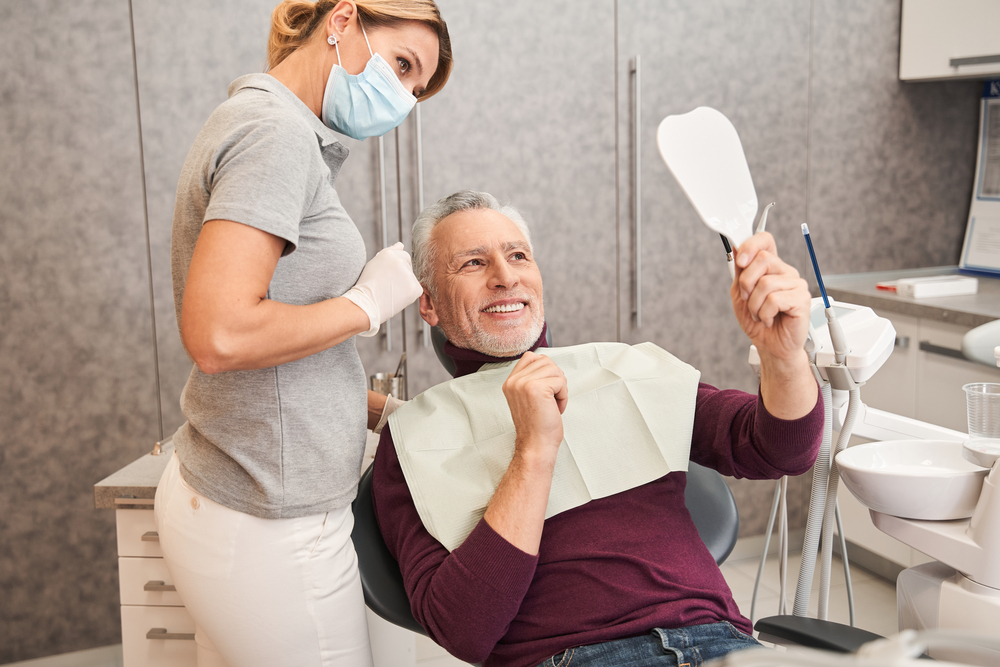
Aging affects us in many ways: physical changes, reduced strength and endurance, more frequent health issues, and more. Unfortunately, the teeth and mouth are not spared when it comes to the impact of aging on the body. Oral health is directly affected by physiological changes and the decline of certain key bodily functions. Below, we present three main ways aging influences oral health.
Reduced Immune Defenses
One of the many effects of aging is the gradual decline of immune function. As the years go by, the immune system becomes less efficient, which explains why older adults are more vulnerable to illnesses and complications.
In terms of oral health, this weaker immunity increases the risk of gum disease and periodontal disease. These conditions initially affect the gums but can spread to the supporting tissues that hold the teeth in place. In advanced stages, without treatment, they can cause teeth to loosen and eventually fall out.
Oral cancer is another disease whose prevalence rises significantly with age, particularly after age 50. This is why regular dental checkups become just as important, if not more important, as we get older. Preventive monitoring helps detect issues early so they can be treated before they cause serious damage.
Dry Mouth (Reduced Saliva)
Dry mouth is another common consequence of aging. The salivary glands tend to lose some of their ability to produce saliva. Additionally, many medications associated with age-related health problems list dry mouth as a side effect.
Saliva plays a crucial role in oral health. It helps rinse away food particles on the teeth and naturally neutralizes some of the acids produced by oral bacteria. This makes saliva essential in the prevention of tooth decay. When saliva production decreases, teeth become more vulnerable to bacteria.
A lack of saliva can also affect chewing and speech, and it may cause discomfort for those who wear dentures. It is important to discuss dry mouth with your dentist, as several strategies can help manage it.
Missing Teeth
Many older adults have missing teeth, often due to less effective dental treatments in the past. Years ago, removing problem teeth was common practice instead of attempting to preserve them. Fortunately, these approaches are no longer used today.
However, it is important to understand the consequences of missing teeth when they are not replaced: movement of the remaining teeth, increased vulnerability to gum and dental disease, jawbone loss, and more.
Fortunately, many effective options are now available to replace missing teeth and prevent these complications. At the Centre Dentaire de Haute Technologie du Québec, we offer several solutions to our patients in Montreal, including dental implants and implant restorations, traditional bridges, partial dentures, and full dentures. Come meet us for a personalized treatment plan tailored to your oral health needs and your budget.
No matter your age, our dentists and their team are committed to providing care and follow-up tailored to your needs.