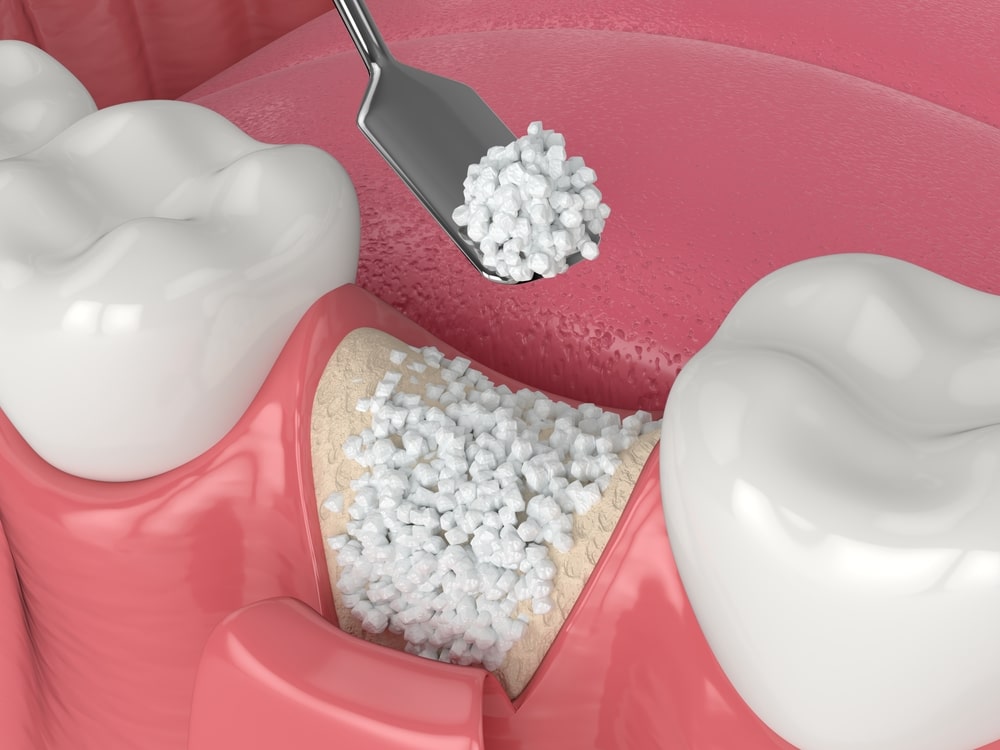
A bone graft is a dental surgery that can be performed in the clinic. By increasing the bone volume of the jaw, the graft prepares it for the placement of one or several dental implants. Here is an overview of how it works.
Dental Implant to Replace Missing Teeth
A dental implant is a small titanium screw only a few millimeters in size. Placed inside the jawbone during surgery, the implant acts as an artificial root to replace one or more missing teeth. Multiple dental implants can be placed and combined with several types of restorations: crowns, dental bridges, partial prostheses, or complete prostheses.
Implant-supported restorations are the preferred solution for replacing missing teeth. Implants provide excellent stability for replacement teeth and offer a highly natural-looking result. They also preserve jawbone health and prevent premature aging of the lower face.
The Importance of Sufficient Bone Volume
The secret of dental implants lies in a process called osseointegration. After surgery, new bone cells gradually form around the implant, allowing it to integrate with the jawbone. For the procedure to succeed, the bone volume must be sufficient, meaning the height and thickness of the bone must allow proper placement of one or more dental implants.
When teeth have been missing for a long period, jawbone loss naturally occurs. Without tooth roots, the bone is no longer stimulated, which leads to bone shrinkage. This is why, in some cases, a bone graft is necessary.
How Is a Bone Graft Done?
Before considering implant placement, a complete implantology consultation and exam are required. Several factors affect feasibility, including lifestyle habits (oral hygiene, smoking, etc.) and the condition of the jawbone.
In some cases, a bone graft must be performed before implant surgery. This procedure is usually done in a dental clinic. The bone graft material can come from the patient’s own body, in which case it is harvested in an operating room by an oral and maxillofacial surgery specialist. The graft may also come from an external source or be synthetic.
Steps of a Bone Graft:
- Local anesthesia is administered to prevent discomfort.
- The dentist makes an incision in the gum to access and prepare the area receiving the graft.
- The graft material is placed, then covered with a special membrane that protects it and keeps it stable.
- Over the following weeks, as healing occurs, the graft cells integrate with the natural bone cells.
A bone graft is an effective solution for increasing jawbone volume in preparation for dental implant placement. To learn more or if you are considering implants to replace missing teeth, request a consultation with the team at Centre Dentaire de Haute Technologie du Quebec.