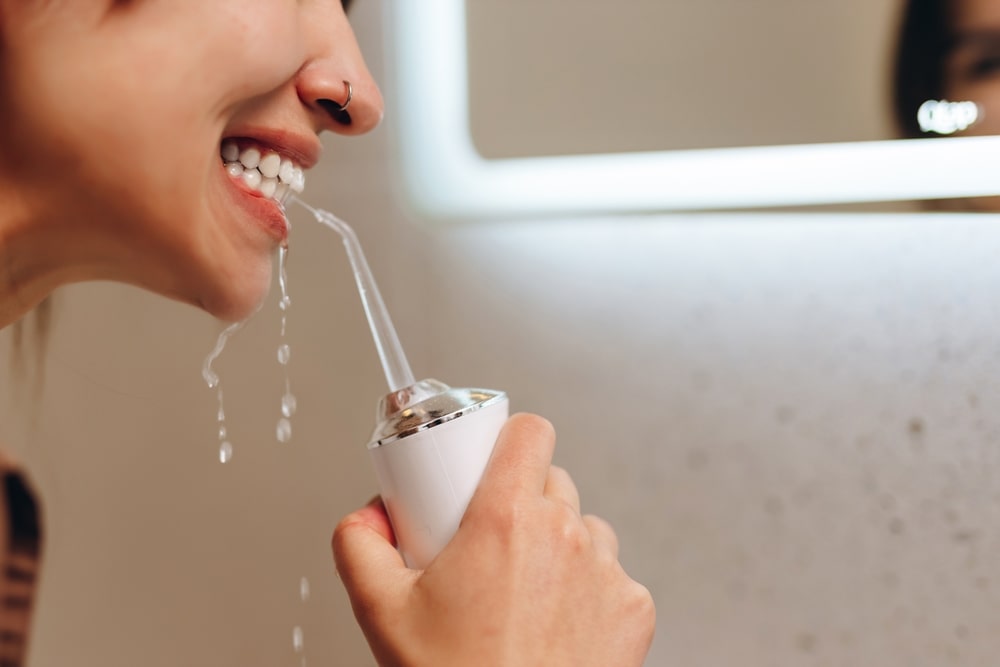
Maintaining good oral hygiene is essential to prevent cavities, gingivitis, and other dental problems. In addition to brushing, flossing is often recommended to remove plaque and food debris between the teeth. But what about the dental water flosser, also known as a Waterpik or oral irrigator? Is it an effective alternative to dental floss? Discover its benefits and the situations in which it is particularly recommended.
What is a Dental Water Flosser?
A dental water flosser is a device that uses a pulsating stream of water to remove food debris and dental plaque between the teeth and along the gumline. Unlike dental floss, which requires direct contact with the teeth, the water flosser works gently through water pressure, making it an appealing tool for many patients.
There are several types of water flossers: some are countertop models with a water reservoir, while others are portable and rechargeable. Some devices even allow the addition of an antiseptic mouthwash to the water for more effective cleaning.
Does a Water Flosser Replace Dental Floss?
Although a water flosser is an excellent complement to brushing, it does not completely replace dental floss. Dental floss is particularly effective at removing plaque between teeth, where water and brushing alone may not always reach. However, for people who have difficulty using dental floss, a water flosser can be an effective alternative to help reduce plaque buildup and improve gum health.
Ideally, both should be used: dental floss for deep mechanical cleaning and the water flosser to remove remaining debris and massage the gums.
When Is the Use of a Water Flosser Recommended?
A water flosser is especially helpful for certain groups of patients, including:
People with Orthodontic Appliances
Braces and wires make flossing more difficult. A water flosser makes it easier to remove food debris trapped in orthodontic appliances.
People with Dental Implants or Crowns
A water flosser effectively cleans hard-to-reach areas around dental restorations, reducing the risk of inflammation.
Patients with Gum Disease
For individuals with gingivitis or periodontitis, using a water flosser can help reduce inflammation by gently cleaning below the gumline.
People with Reduced Dexterity
Patients with arthritis or other physical limitations may find it easier to use a water flosser than to handle dental floss.
Should You Adopt One?
A dental water flosser is an excellent addition to your oral hygiene routine. While it does not fully replace dental floss, it offers a practical and effective solution for many people. If you are considering adding this device to your routine, talk to your dentist on the Plateau Mont-Royal. They can recommend the most suitable model for your needs and advise you on proper use.