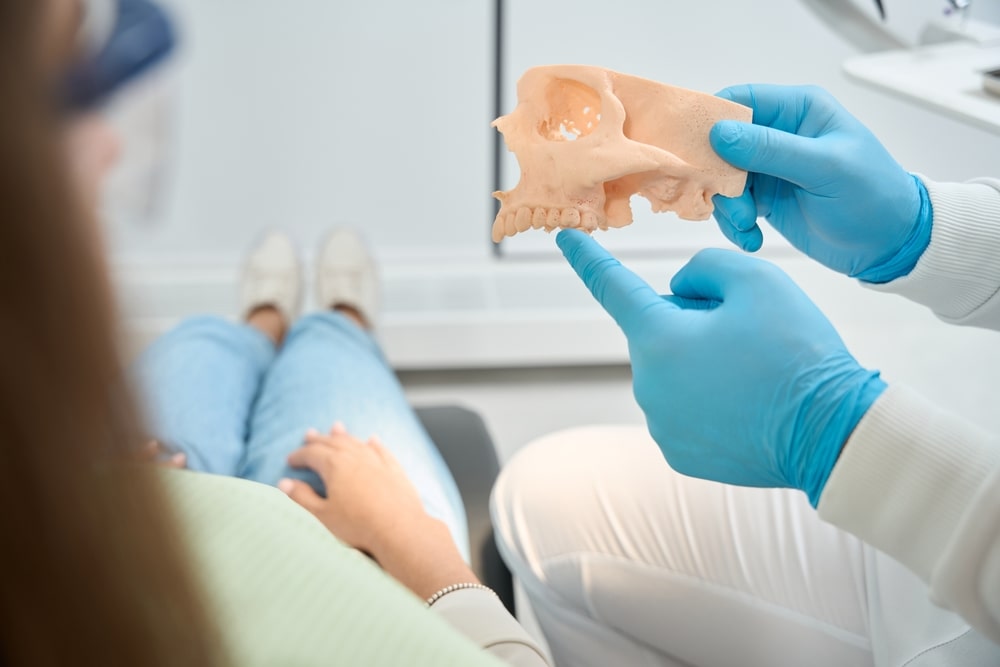
Jawbone loss is an important issue in dentistry, especially among older adults who are looking to replace missing teeth. In this article, we explore the nature of this problem, its consequences, and the solutions available to address it.
Why does bone volume decrease?
Bone volume loss can occur for several reasons. This means that, for certain factors, the growth of new bone cells slows down, so the cells that naturally die are no longer replaced. As a result, the alveolar bone of the jaw decreases in height and thickness.
Here are the main causes of this phenomenon:
- Loss of permanent teeth: when permanent teeth are lost, the bone is no longer stimulated in the areas where the roots used to be. Waiting too long before replacing missing teeth increases the risk of bone loss, and the severity is directly related to the number of missing teeth.
- Periodontitis: this is an advanced stage of gum disease, caused by an overgrowth of bacteria in the tissues that anchor the dental roots. These bacteria release toxins that lead to irreversible destruction of the periodontal tissues, including the alveolar bone. In more advanced cases of periodontitis, significant bone loss can occur.
- Aging: natural aging reduces the efficiency of the body’s metabolic functions, including tissue regeneration. As a result, aging affects jawbone density and the strength of the tissues that hold the dental roots in place.
What are the consequences of bone loss?
When bone loss in the jaw is significant, it can have several effects on oral health.
- Loss of teeth: without sufficient bone support, teeth can become loose and eventually fall out. This affects chewing and can also change tooth alignment and bite.
- Changes in facial appearance: the jawbone provides structure and support to the face. Severe bone loss can cause the lower face to appear sunken, leading to premature aging and aesthetic changes.
- Problems with dentures: for people who wear dentures, insufficient bone volume can make it difficult to achieve a proper fit. Poorly fitting dentures can cause discomfort, difficulties with eating, and issues with speech.
- Complications for dental procedures: inadequate bone volume can complicate or even prevent certain dental treatments, such as the placement of dental implants. Implants require a strong bone foundation to integrate successfully, and insufficient bone can lead to implant failure.
Overall, jawbone loss can have a significant impact on quality of life, causing discomfort, difficulty eating, and changes in facial appearance.
What solutions are available?
To prevent bone loss, the best approach is to address the underlying causes. Good daily oral hygiene and regular dental visits help prevent gum disease from progressing to periodontitis and causing further damage.
If teeth are missing, it is important to replace them as soon as possible. Dental implants are the best option. These artificial roots can securely support several types of dental restorations. Their presence in the bone also stimulates continuous bone growth, helping to prevent further bone loss.
Finally, if bone loss makes implant placement difficult, a bone graft may be recommended. This procedure involves placing a bone graft taken from the patient or from a donor. As the area heals, the graft integrates with the natural bone and increases bone volume. This creates the optimal conditions needed for placing implants in the correct position and angle while avoiding the complications associated with jawbone loss.
For all dental surgery needs on Plateau Mont-Royal, whether for dental implants or bone grafting, the team at the Centre Dentaire de Haute Technologie is here to help.