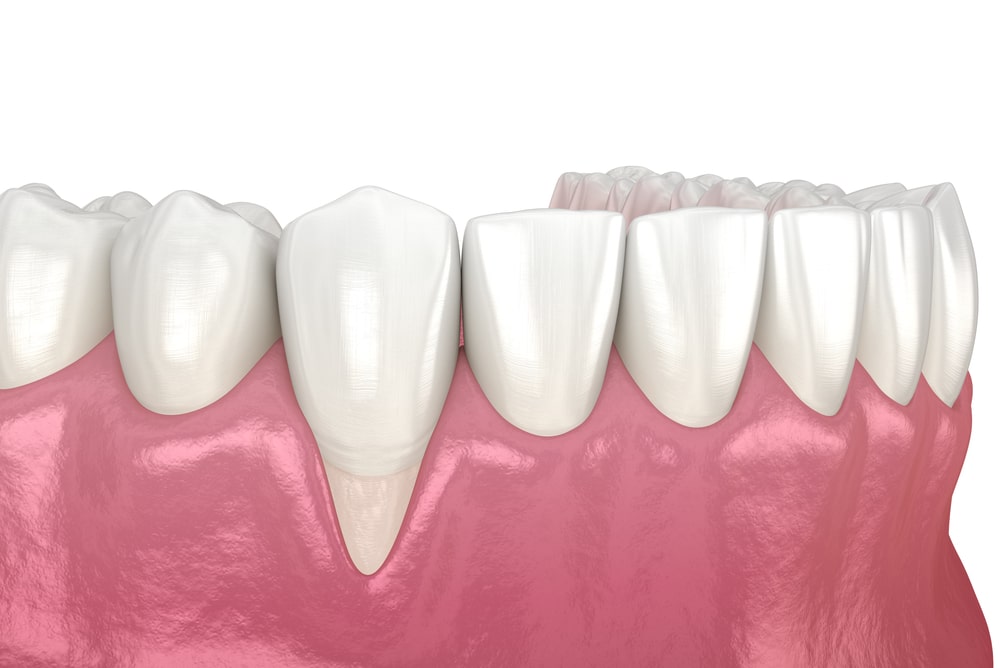
Gum grafting is a procedure that is sometimes necessary. It is a relatively simple surgery performed in the clinic. Below, we share key information about gum grafting, including the reasons it may be required and the steps involved in the procedure.
Why Get a Gum Graft?
A gum graft is mainly used to reverse the effects of gum recession or to prevent it. Gum recession refers to the shrinking of the gum tissue around the roots of certain teeth. Under the influence of specific factors, the gum tissue can lose thickness and height, leading to exposed tooth roots and loose teeth. Recession may affect a single tooth or several teeth at once.
Gum recession can occur naturally—due to thin or fragile gum tissue or because of the poor positioning of certain teeth. Poor oral hygiene, incorrect brushing technique, gum disease, and tobacco use can also contribute to recession.
A gum graft helps restore the gum tissue so the gums can continue to support the teeth and protect the roots. Since the roots are not covered by enamel, unlike the crowns of the teeth, their exposure can cause dentin hypersensitivity. Exposed roots are also at higher risk for tooth decay.
Receding gums may also create an unaesthetic appearance, making certain teeth look longer than others.
Types of Gum Grafts
There are three main types of gum grafts performed in the clinic by the dentists at the Centre Dentaire de Haute Technologie du Québec:
- Connective tissue graft: A small strip of connective tissue is taken from the palate. It is then used to cover the exposed root of a tooth affected by recession.
- Free gingival graft: A thin layer of gum tissue is taken directly from the patient’s palate. The graft is placed at the base of the recession to stop its progression. This increases the amount of attached gum and helps reverse the recession.
- Alloderm graft: This type of graft uses donor tissue. It consists of freeze-dried human tissue with the cells removed, leaving behind the regenerative collagen matrix. This graft provides results similar to connective tissue or free gingival grafts.
Steps of the Procedure
Depending on your oral health needs and your specific case of recession, your dentist will select the most appropriate type of graft. The procedure is performed under local anesthesia and includes the following steps:
- The area receiving the graft is thoroughly cleaned to remove tartar and bacteria.
- The graft is taken from the patient’s palate (except for Alloderm grafts, which use donor tissue).
- The graft is placed and secured with sutures.
- During healing, the graft gradually integrates with the natural gum tissue, improving its height and thickness.
- The palate, where the graft was taken, may remain sensitive for a few days. Your dentist will also provide detailed postoperative instructions to support healing, including advice on oral hygiene and nutrition during the days following the procedure.
For gum grafting in Montreal on the Plateau Mont-Royal, do not hesitate to contact our team. We will evaluate your needs during an initial consultation and guide you toward the best treatment option.