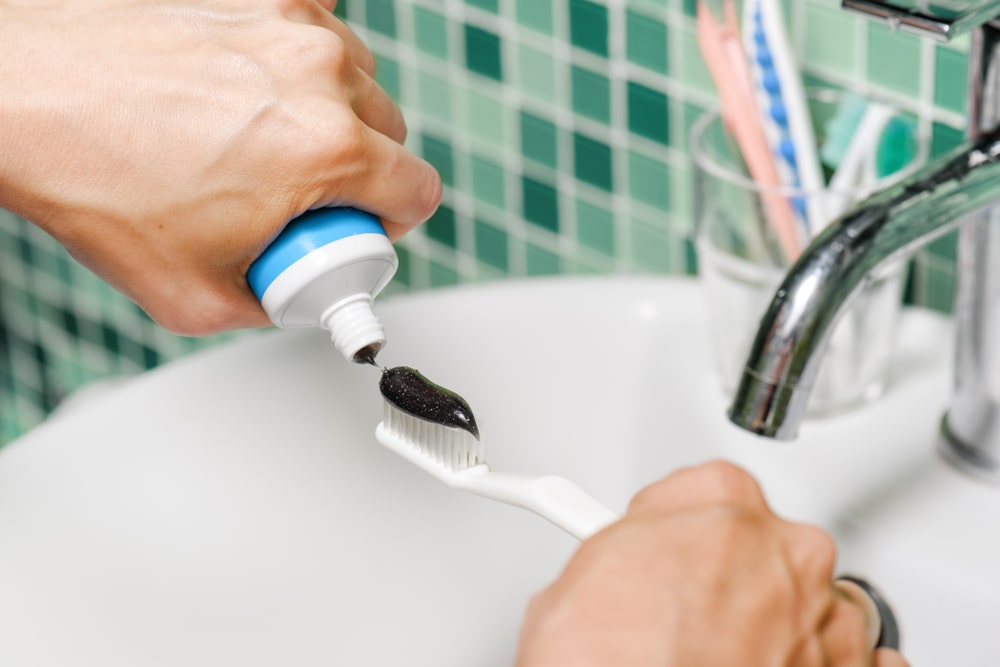
In recent years, more and more dental hygiene products containing activated charcoal have appeared on the market. These are mostly toothpastes that are promoted for their teeth-whitening benefits. However, behind the claims associated with these products lie certain risks for dental health, especially when it comes to enamel erosion. We explain more in this article.
Properties of Activated Charcoal
Activated charcoal is commonly used in medicine for its detoxifying properties. It can bind to potentially toxic substances and prevent their absorption by the body. It is often used to treat cases of food poisoning or exposure to highly toxic substances. Activated charcoal is also found in many types of filters, including air filters and water pitcher filters, as it helps remove harmful agents.
Activated charcoal is produced by burning organic materials at very high temperatures. These materials may include tree bark, coconut shells, or other nut shells. The result is a very fine carbonized powder containing micropores. These pores allow the charcoal to absorb substances.
Charcoal Toothpaste for Teeth-Whitening
Charcoal powder is abrasive, in addition to having detoxifying properties. When added to toothpaste, it helps remove surface stains from the teeth. These stains may be caused by dark foods and beverages, smoking, and other lifestyle habits.
A Word of Caution from Your Plateau Mont-Royal Dentist
Charcoal toothpaste is an accessible way to achieve whiter teeth. However, it is important to be aware of the effects of improper or excessive use.
Charcoal toothpaste is highly abrasive. While it removes stains, it can also contribute to enamel wear. Enamel is the outer protective layer of the teeth. Although it is very strong, it can wear down over the years and due to certain habits. The use of charcoal toothpaste can accelerate this process, which we want to avoid.
What does worn enamel mean? It means that the teeth become less resistant to bacteria and cavities. In addition, worn enamel can lead to tooth sensitivity to cold, acids, and other external stimuli. Exposed enamel can also allow the underlying dentin, which is naturally more yellow, to show through. When dentin becomes visible, the teeth may appear more yellow.
As you can see, excessive use of charcoal toothpaste may lead to the opposite of the desired whitening effect over time, by wearing down the enamel and causing the teeth to look more yellow.
Tips for Using Charcoal Toothpaste
- Use it for one or two brushings per week at most. This is enough to provide whitening effects.
- Avoid using it on a daily basis.
- Choose a toothpaste that contains the finest charcoal powder possible, as this helps reduce abrasiveness.
It is also recommended to choose professional whitening options offered in dental clinics. Our clinic provides safe and effective treatments to help you achieve a brighter smile. Do not hesitate to discuss these options with your dentist.