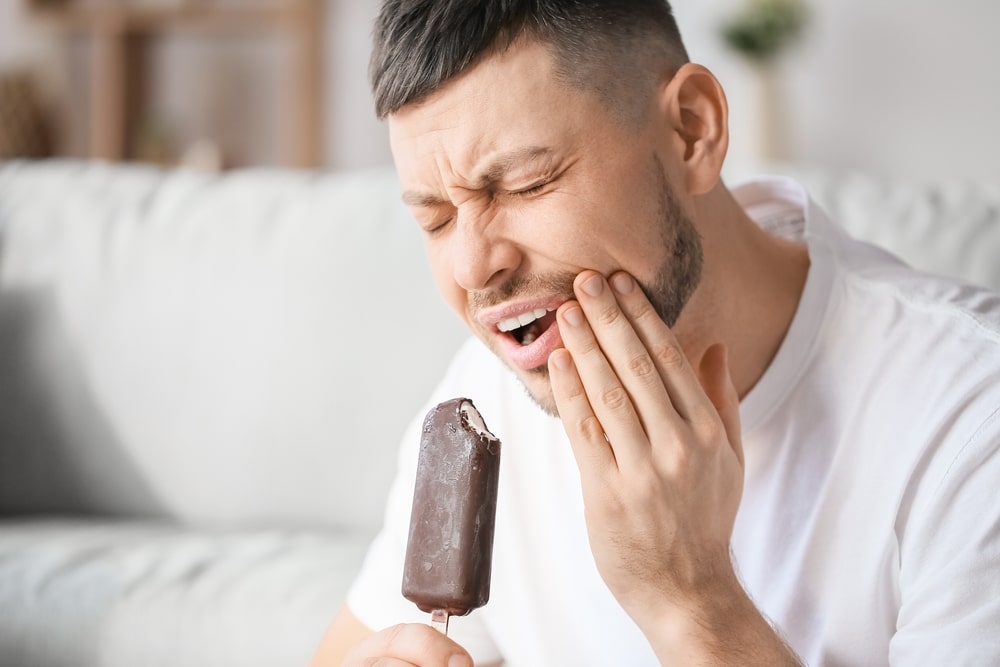
Even if you love ice cream, do you often hesitate to visit your favorite ice cream shop because of the unpleasant sensation caused by cold contact on your teeth? If so, you are probably experiencing dental sensitivity, a common and often bothersome condition. But what exactly causes it, and how can you control or avoid it? The following information will answer these questions.
Understanding Tooth Anatomy to Understand Dental Sensitivity
Before discussing dental sensitivity, let us briefly review the three main parts of the tooth:
- The pulp: this is the central part of the tooth where the blood vessels and nerves are located. These nerves react to various stimuli (cold, heat, acidity) and cause discomfort or even pain when the teeth are exposed.
- The dentin: this is the main internal structure of the tooth. Yellow in color, it contains hundreds of tubules, which are tiny channels that communicate from the outside toward the pulp. External stimuli travel through these tubules to reach the nerves.
- The enamel: this is the outer layer of the tooth. Very hard, it covers the crown (the visible part of the tooth above the gum) and protects it from bacterial attacks and external stimuli. However, it is subject to erosion.
Why Dental Sensitivity Occurs
Dental sensitivity increases and becomes dentin hypersensitivity for two main reasons: thinning of the enamel or gum recession. In both situations, the dentin becomes exposed and the tubules lose the protection normally provided by the enamel or the gums. They then become more reactive to external stimuli such as heat, cold, and acidity. Each of these two main causes has its own contributing factors, some of which can be controlled.
Concrete Causes
- Periodontal diseases: this is the main cause of gum recession. When gingivitis (a mild inflammation at first) progresses into periodontitis (a deeper infection), bacteria can damage the gums and cause them to pull back from the roots.
- Diet: enamel thinning is mainly caused by acidity, which leads to demineralization. Harmful acids can come from food or be produced by bacteria in the mouth that feed on sugary residues. Foods high in sugar (which bacteria love) and foods high in acidity both contribute to enamel erosion.
- Poor oral hygiene: brushing after meals and before bed, along with daily flossing, is the best way to remove food particles that attract bacteria. Without proper oral hygiene, bacteria multiply more easily and produce acids that damage enamel.
- Wear of oral structures: over time, it is normal for enamel to wear and thin. The gum tissues also lose their strength. However, this process sometimes accelerates. For example, bruxism (nighttime teeth grinding) or misaligned teeth can cause excessive enamel wear. Oral piercings can also cause harmful friction against the gums.
Good Habits to Limit Dental Sensitivity
Unfortunately, it is nearly impossible to reverse dental sensitivity when it is caused by enamel thinning, as this process is irreversible. However, using toothpaste for sensitive teeth can help reduce discomfort. Maintaining good oral hygiene and healthy eating habits helps slow enamel erosion and prevent hypersensitivity from worsening. If sensitivity is due to gum recession, a gum graft may help reduce the problem.
A regular dental follow-up with your dentist at Centre Dentaire de Haute Technologie du Quebec in Le Plateau Mont Royal can be beneficial. Not only does professional cleaning help control bacteria, but you will also receive personalized advice.