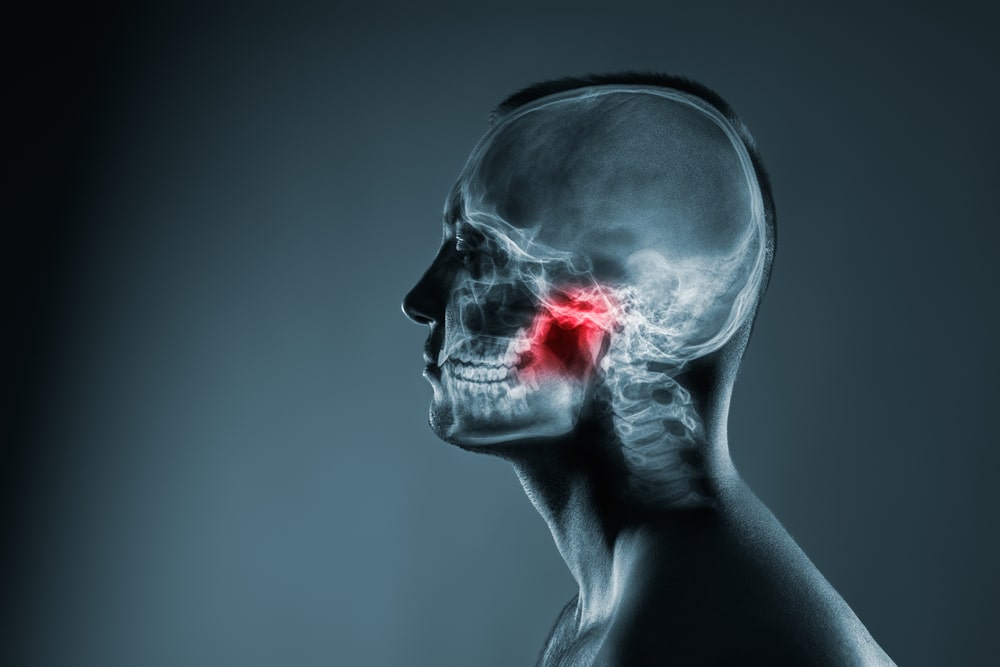
Did you know that your dentist’s expertise extends beyond teeth and oral tissues to include the jaw joints as well? These joints are called the temporomandibular joints. Unfortunately, they can be affected by disorders that cause dysfunction and pain. Below, we take a closer look at this important issue.
Complex Joints
The temporomandibular joints (TMJ) connect the mandible, or lower jaw, to the skull and therefore to the upper jaw. They are located on each side of the face, just below the ears. These joints allow the wide range of movements of the jaw. They are heavily used during chewing, but also when talking, laughing, yawning, and any time the mouth opens and the jaw moves. They allow the mouth to open and the mandible to move in all directions.
Within the TMJ, the end of the mandible, called the condyle, fits into a cavity in the skull. Muscles and ligaments control the movement and stability of the joint. Between the two bones lies a very important structure: the articular disc. It is a small pad of cartilage that distributes pressure and absorbs shock in the TMJ.
In most cases, TMJ disorders and their symptoms are caused by dysfunction of the joint structures, wear, or displacement of the articular disc. As we will see below, there are main causes and aggravating factors.
What Causes Temporomandibular Joint Disorders?
The primary cause of TMJ disorders is malocclusion. Malocclusion refers to an imbalance in the relationship between the upper and lower jaw. This can prevent the teeth from meeting correctly, creating imbalances. These imbalances can affect the function of the TMJ because pressure is not properly distributed. Over time, this may lead to damage or displacement of the articular disc. In other cases, trauma such as a fall or a blow to the face can trigger problems.
Bruxism, which is the grinding of teeth during sleep, and stress are often mentioned as causes of TMJ disorders. However, they are usually factors that aggravate the problem rather than the root cause.
Symptoms of Temporomandibular Joint Disorders
Here are symptoms commonly associated with TMJ dysfunction:
- Jaw pain, more intense upon waking (often related to bruxism)
- Clicking or crackling sounds in the joints, especially when opening the mouth wide or chewing
- Jaw popping when opening widely
- Jaw stiffness or even locking
- Ear pain, since the ear canal is very close to the TMJ
- Dental pain
What to Do If You Suspect a TMJ Disorder?
If you notice the symptoms above, it is important to consult your dentist and discuss them. A TMJ and dental examination will allow your dentist to diagnose a possible disorder. Treatment options can then be proposed.
In cases of malocclusion, orthodontic treatment can help realign the jaws, straighten the teeth, and improve the bite. Jaw surgery may be necessary for more severe cases. In cases of bruxism, an occlusal splint may be recommended. This protective device helps shield the teeth and reduces excessive pressure on the TMJ.
TMJ disorders can affect quality of life and cause significant pain. They should not be ignored, as your dentist at Plateau Mont-Royal can help you manage them. If needed, request a consultation with our team at Centre Dentaire de Haute Technologie du Quebec.