Asepsis is a critical concern for all dental clinics. It is an aspect where every team member, including dentists, hygienists and dental assistants, must demonstrate strict discipline. In this article, we explain what asepsis means in a clinical setting and outline three key procedures that allow us to meet all requirements of our industry.
What is asepsis?
Asepsis refers to a set of measures and practices aimed at preventing and eliminating the presence of pathogenic microorganisms such as bacteria, viruses and fungi. The goal of these procedures is to maintain a clean and sterile environment, reducing the risk of infection. Asepsis is essential in medical fields, especially in dental clinics where invasive procedures are performed and there is close contact with patients’ tissues and mucous membranes.
In a dental clinic, asepsis plays a major role in ensuring the safety of both patients and staff. Below are three key aspects of our asepsis procedures at our Plateau Mont-Royal clinic.
Disinfection and room preparation
At the clinic, dental assistants are responsible for preparing rooms between patients. This includes disinfecting all surfaces, preparing personal protective equipment and ensuring that sterilized instruments are ready for use.
Each time, the assistant follows a precise and rigorous protocol to ensure the room is ready for the next patient and that everything has been properly disinfected.
Advanced technologies for instrument asepsis
Our disinfection and sterilization process for medical instruments involves several steps to guarantee a safe and sterile clinical environment:
- First, the medical instruments are placed in the Miele thermal disinfector designed specifically for dental use. This device, which works similarly to a dishwasher, is approved as a medical device by Health Canada.
- Inside the thermal disinfector, the instruments go through a complete disinfection cycle that effectively removes pathogens. Once this stage is complete, the instruments are prepared for the next level of sterilization.
- To ensure optimal asepsis, the disinfected instruments are carefully packaged. They are placed in metal cassettes or individually wrapped in special sterilization pouches.
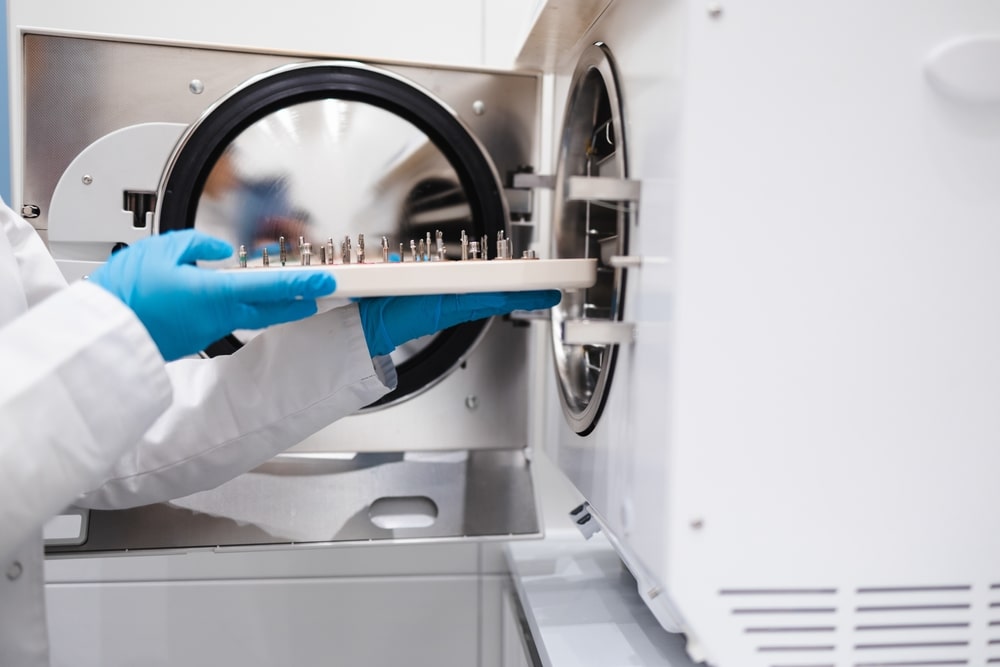
- The instruments then undergo a sterilization cycle in specialized sterilizers. We use the LISA Class B and STATIM models, which are recognized for their effectiveness and compliance with sterilization standards.
- Once sterilized, the instruments are stored in dedicated blue cabinets reserved for sterile items. These cabinets are located in a controlled environment to maintain sterility.
- The instruments remain packaged and stored in the blue cabinets until they are used in the treatment room. This ensures that the instruments stay sterile until the moment they come into contact with our patients.
All these steps are strictly followed to ensure that our patients receive treatments in a safe and hygienic environment.
Independent controls
The Ordre des dentistes du Quebec imposes strict rules regarding asepsis and conducts regular inspections in dental clinics to ensure compliance.
At the Centre Dentaire de Haute Technologie du Quebec, we also employ an independent microbiology laboratory that regularly tests our sterilization equipment to confirm their proper functioning at all times.
We are committed to the health of our patients and our team, which is why we maintain a high level of rigor in all our asepsis procedures.