At Centre Dentaire de Haute Technologie du Quebec, we are committed to offering our patients modern dental technologies. Whether for screening and diagnosing a condition, planning a surgery, or designing a dental restoration, our dentists rely on advanced technologies. One of these is laser cavity detection through DIAGNOdent technology. Here is what you should know about it.
What Is DIAGNOdent Used For?
This technology uses a painless laser beam to detect changes in the density of the hard tissues of the tooth. This refers to the enamel, the outer protective layer, and the dentin, the underlying layer that forms most of the tooth structure. When the laser is applied to a precise area on the tooth surface, it can detect softened areas. It is therefore used to identify early-stage cavities.
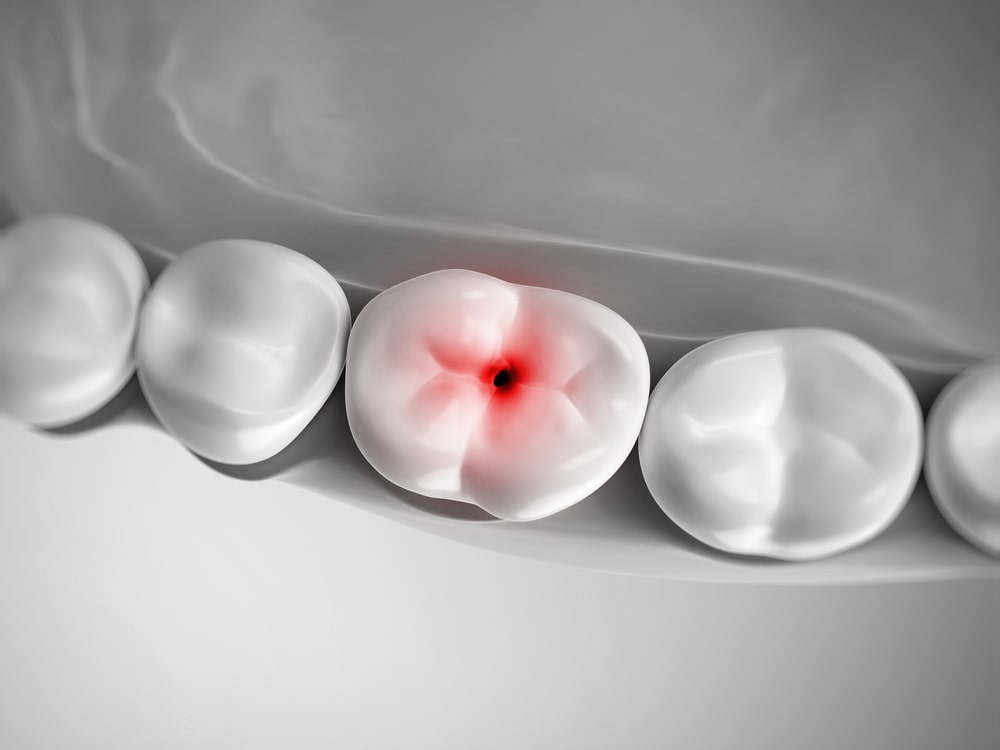
DIAGNOdent is mainly used to detect cavities that form in the pits and fissures on the chewing surfaces of molars and premolars. These areas tend to accumulate plaque and tartar because they are harder to clean. They are sometimes deep and narrow, making them ideal spots for cavity development. Cavities in these areas can also be more difficult to detect with the naked eye, which makes this laser technology especially useful.
A Diagnostic Technology to Support the Dentist
DIAGNOdent technology does not replace your dentist’s expertise in detecting cavities. Instead, it complements the other techniques used by your dental team, such as visual examination, X-rays, and the use of the dental explorer.
To support diagnosis, your dentist at Plateau Mont-Royal may use this laser technology during your routine visits, especially if the pits and grooves of your teeth are more difficult to examine.
Why Detecting Cavities Early Matters
It is always better to detect a cavity when it is still at an early-stage. In some cases, when the cavity is extremely early, a remineralization protocol can be suggested to reverse its effects. Otherwise, the cavity can be easily treated with a filling. This prevents the decay from spreading and preserves as much natural tooth structure as possible.
If a cavity deepens without being detected, it can lead to serious oral health issues. If decay reaches the dental pulp, the central part of the tooth containing nerves and blood vessels, it can cause a painful infection. In cases of a very deep cavity or a severe infection of the tooth and its surrounding tissues, the tooth may no longer be viable and extraction might become necessary.
Preventing Deep Cavities With Regular Visits
The best way to prevent deep cavities is to visit your dentist regularly. Routine visits include a complete dental examination that screens for cavities on all tooth surfaces. This helps prevent progression and the related complications. Dental exams are recommended every six to twelve months, depending on each person’s situation.