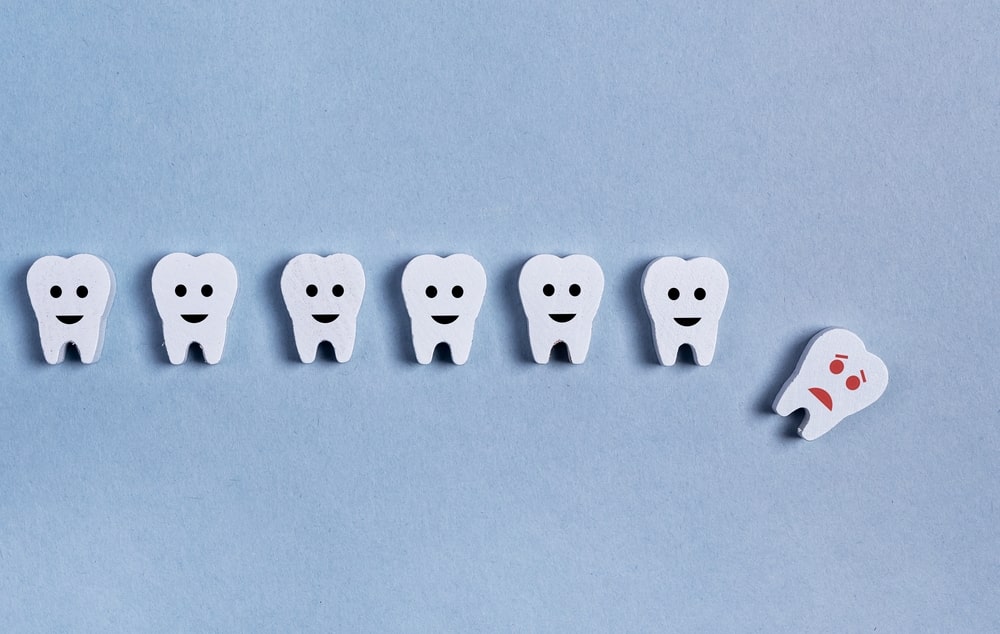
Missing teeth that are not replaced with appropriate dental restorations are not only an aesthetic concern. In fact, missing teeth can lead to several complications for the rest of the dentition, many of which people do not suspect. To help you better understand this important topic, our team has prepared this article.
The Dentition: A Delicate Balance
Our 28 teeth (32 for those who still have their wisdom teeth) stay in place thanks to the support of neighboring teeth and the opposing tooth located in the opposite jaw. Losing even a single tooth can disrupt this delicate balance.
If a tooth is not replaced quickly after its loss, unwanted tooth movements will inevitably occur. The remaining teeth will try to shift and fill the empty space.
Missing Teeth: A Situation With Multiple Causes
A significant proportion of adults have one or more missing teeth. In this country, the most common cause of permanent tooth loss is periodontitis, an advanced form of gum disease that deteriorates the tissues anchoring teeth to the jawbone.
Deep dental cavities can also compromise the viability of a tooth, making extraction necessary. Dental trauma, particularly during sports, also accounts for a fair number of tooth losses among adults. Whatever the cause, missing teeth should not be ignored due to the potential consequences.
Possible Consequences of Missing Teeth
Here are some of the potential consequences of permanent tooth loss when missing teeth are not replaced:
- Misalignment of the remaining teeth: unwanted tooth movements cause the rest of the dentition to become misaligned.
- Increased risk of oral diseases: spaces created by misalignment can trap bacteria, increasing the risk of cavities or gum problems.
- Premature wear: the remaining teeth must work harder during chewing and are therefore more likely to wear down prematurely.
- Loss of additional teeth: in advanced cases, neighboring teeth and the opposing tooth may slowly loosen from the jawbone, potentially leading to further tooth loss.
- Loss of bone volume and facial aging: without the roots of the missing teeth, the jawbone loses height and thickness because it is no longer stimulated. As a result, the muscles in the lower face may sag, giving the appearance of premature aging.
Replacement Solutions for All Needs
Today’s dentistry offers several solutions for replacing missing teeth through various types of dental restorations. Among these options, restorations supported by dental implants stand out for their strength, natural appearance, and positive impact on jaw health.
If you have missing teeth, the best step is to request an implantology consultation with your dentist at the Centre Dentaire de Haute Technologie du Québec in Plateau Mont-Royal. Our team will take the time to understand your needs and develop a treatment plan that fits your expectations and budget.